
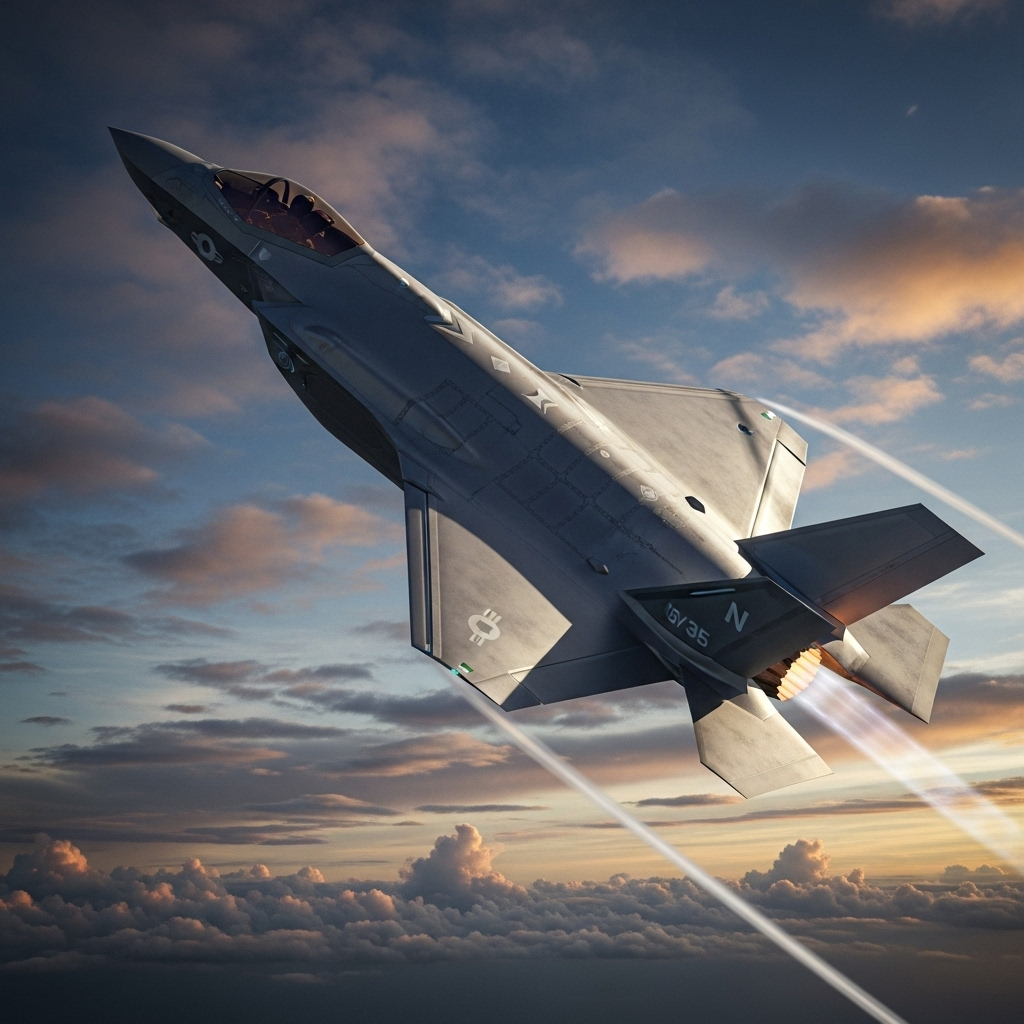
Breaking Down the Tech Behind Today’s Most Advanced Fighter Jets
Modern fighter jets represent the pinnacle of technological innovation, combining speed, power, and intelligence to dominate the skies. These aircraft are equipped with advanced technologies designed to enhance their speed, lethality, survivability, and situational awareness. Over the years, the evolution from fifth-generation fighter jets like the F-22 Raptor and F-35 Lightning II to emerging sixth-generation designs has pushed the boundaries of what is possible in aerial combat. This shift is driven by the need to maintain superiority in increasingly contested airspaces, where cutting-edge advancements are no longer optional but essential.
From stealth technology to artificial intelligence, the capabilities of these aircraft are nothing short of extraordinary. In this article, we’ll explore the key technologies that power these machines and compare the innovations of fifth- and sixth-generation jets, offering a glimpse into the future of aerial warfare.
The Invisible Edge
One of the most defining features of modern fighter jets is their stealth capability, which allows them to evade detection by radar systems. Stealth technology enhances survivability by reducing the aircraft’s radar cross-section (RCS), making it harder for enemy forces to track or target them. This is achieved through the use of special materials, radar-absorbing coatings, and innovative designs that minimize reflections.
Fifth-generation aircraft like the F-35 Lightning II and the F-22 Raptor exemplify the effectiveness of stealth technology. The F-35, for instance, features an advanced sensor suite and low-observable characteristics, enabling it to penetrate enemy defenses undetected. However, the evolution of stealth does not stop there. Sixth-generation jets, such as the U.S. Air Force’s Next-Generation Air Dominance (NGAD) program and the U.K.’s Tempest project, aim to improve on this technology with adaptive materials and active stealth systems. These innovations may include the ability to alter an aircraft’s radar signature in real time, further enhancing its ability to operate in high-threat environments.
Redefining Speed
Speed and maneuverability are critical in aerial combat, and modern propulsion systems have dramatically redefined what fighter jets can achieve in these areas. Fifth-generation jets, like the F-22 and Su-57, are equipped with advanced turbofan engines that provide unmatched thrust-to-weight ratios and supercruise capabilities, allowing them to sustain supersonic speeds without engaging afterburners.
The leap to sixth-generation fighter jets will bring even more impressive propulsion systems. These aircraft are expected to feature adaptive cycle engines, which can optimize performance by switching between modes for maximum efficiency or maximum thrust, depending on the mission requirements. For example, the Pratt & Whitney XA100, a prototype adaptive engine, has demonstrated significant improvements in fuel efficiency, range, and power. This kind of propulsion technology will allow future fighters to achieve greater speeds and fly farther while carrying more advanced weaponry and sensors.
Artificial Intelligence and Sensor Fusion: The Brain of the Jet
Modern fighter jets are as much about intelligence as they are about raw power. Artificial intelligence (AI) and sensor fusion are two key technologies that transform these machines into highly aware and autonomous platforms. AI systems onboard aircraft can process vast amounts of data from sensors, analyze threats, and even assist pilots in decision-making during high-stress combat scenarios. This not only improves situational awareness but also reduces pilot workload, allowing them to focus on critical tasks.
Fifth-generation jets, such as the F-35, already feature sensor fusion capabilities that integrate data from multiple sources, including radar, infrared, and electronic warfare systems. This allows pilots to have a comprehensive view of the battlefield. Sixth-generation designs aim to take this a step further by integrating advanced AI systems capable of real-time data sharing with other platforms, such as drones and ground units. These systems could even autonomously execute certain functions, like electronic warfare operations or targeting, making the aircraft more efficient and effective in complex environments.
The Future of Lethality
Lethality in modern fighter jets is no longer confined to traditional missile and cannon systems. Directed energy weapons (DEWs), such as high-energy lasers, are poised to revolutionize aerial combat. These weapons offer precise targeting capabilities, near-instantaneous engagement, and a virtually unlimited ammunition supply, as long as power is available. DEWs are expected to be a key feature of sixth-generation fighters, providing them with the ability to neutralize threats such as drones, missiles, and enemy aircraft with unparalleled speed and precision.
Another transformative concept is network-centric warfare, which allows fighter jets to operate as part of a highly integrated network of platforms. By sharing data and coordinating attacks, these systems amplify the effectiveness of each unit in a combat scenario. Fifth-generation jets already utilize elements of network-centric operations, but sixth-generation fighters will likely incorporate advanced cloud-based systems and secure data links to enable seamless communication between multiple aircraft, unmanned systems, and command centers.
Fifth-Generation vs. Sixth-Generation Fighter Jets: A Comparative Analysis
While fifth-generation fighter jets set the standard for modern airpower, sixth-generation designs are poised to push the envelope even further. Fifth-generation aircraft, like the F-22 and F-35, focus heavily on stealth, supercruise, and advanced sensor integration. These jets are designed to excel in air superiority, strike missions, and reconnaissance roles while remaining largely undetectable to enemy forces.
In contrast, sixth-generation fighters aim to incorporate a host of new capabilities, such as AI-driven systems, directed energy weapons, and advanced propulsion technologies. For example, the NGAD program is expected to include manned-unmanned teaming, where a single pilot could control a swarm of autonomous drones to execute coordinated missions. Similarly, the Tempest project plans to introduce a modular design, allowing future upgrades to be implemented with ease. These advancements will enable sixth-generation aircraft to maintain a decisive advantage in an era of rapidly evolving threats.
The Future of Aerial Combat
The advanced technologies found in modern fighter jets are not just tools of warfare—they represent the cutting edge of innovation and engineering. From stealth and propulsion to AI and directed energy weapons, each advancement enhances the speed, lethality, survivability, and situational awareness of these aircraft. While fifth-generation fighters like the F-22 and F-35 have set new benchmarks in airpower, the advent of sixth-generation designs promises to redefine the future of aerial combat.
The Nutshell
As programs like the NGAD and Tempest continue to develop, the capabilities of these aircraft will only grow more impressive. With their unparalleled combination of speed, intelligence, and adaptability, sixth-generation fighter jets will ensure that the skies remain a strategic domain where technological superiority reigns supreme. In this ever-evolving landscape, these cutting-edge machines will not only protect nations but also shape the future of warfare itself.