

Why Walk When You Can Glide?
Picture this: navigating massive buildings without breaking a sweat. Sure, elevators and escalators steal the spotlight, but there’s an unsung hero—moving walkways. These horizontal wonders make dashing through airports, conquering malls, and surviving endless expos just a tad more tolerable. Forget walking—let the walkway do the hard work for you. Welcome to effortless, horizontal transportation.
In vibrant hubs like Dubai, where innovation thrives, companies are reshaping mobility one step at a time. No longer confined to elevators, they’re venturing into horizontal solutions with moving walkways. These pathways aren’t just about convenience; they’re about redefining how modern spaces operate, ensuring seamless foot traffic and embedding technology into everyday infrastructure.
Step on and let’s get rolling!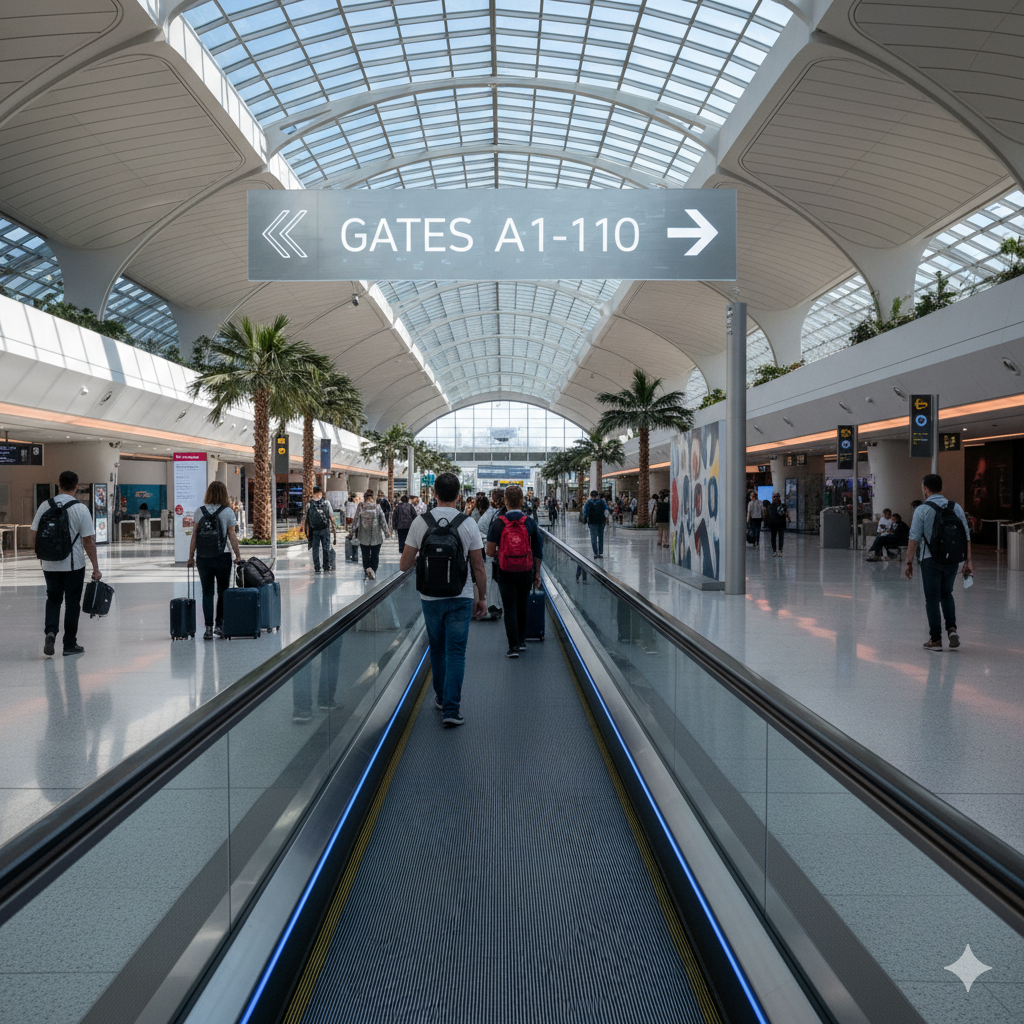
The Lowdown on Moving Walkways
Think of a moving walkway, or travelator, as a horizontal conveyor belt designed for transporting people over large distances. These walkways aren’t for scaling floors but rather for easing journeys across flat or slightly inclined spaces. They make navigating sprawling airports, malls, theme parks, and exhibition halls a breeze, sparing you from the unnecessary drudgery of long walks. It’s movement made effortless, one step—or glide—at a time.
Equipped with rubber or metal surfaces, moving walkways operate like flat escalators. Step on, and you’re smoothly transported forward—perfect for when walking feels overrated.
Exploring Moving Walkway Types
Moving walkways are divided into two main types:
Belt Moving Walk: Sporting a rubber belt, this type makes long, flat areas feel less like a marathon. They’re most commonly found in airports or malls where efficiency is key.
Pallet Moving Walkway: Constructed from metal or plastic interlocking panels, this walkway is a durability powerhouse. Designed for places that see heavy traffic, such as amusement parks or transit hubs, it’s all about standing up to wear and tear.
Though created for the same use, their builds and preferred locations highlight their differences.
Moving Walks: A Modern Necessity
Why are moving walkways a key part of modern design? Time savings, for one. Picture trekking across a huge airport, mall, or expo center while lugging heavy bags—it’s exhausting just thinking about it. Moving walkways solve this by giving you a break from the grind, allowing you to glide effortlessly across long distances with minimal effort.
And let’s not forget their traffic-smoothing superpower! In busy places, they cleverly split foot traffic. Those in a hurry use the moving walkway, while the leisurely walkers keep to the side. It’s organized chaos at its best, ensuring the flow stays smooth and frustration stays low.
Moving walkways turn large spaces into accessible zones. They’re a blessing for seniors and those with mobility issues, providing a smooth, fatigue-free journey that keeps everyone moving comfortably, no matter the distance.
Smarter and more efficient, moving walkways will soon become integral to the infrastructure of cutting-edge, tech-driven cities.